Sachie KUSAKA
Position: Assistant Professor
Degree: Ph.D. (Engineering), Veterinarian
Laboratory: Quantum Beam and Biomaterials Engineering
Field: Radiation Engineering / Medical Engineering / Brain Tumor Therapy
to Laboratory Homepage
Designing smarter ways to treat brain tumors
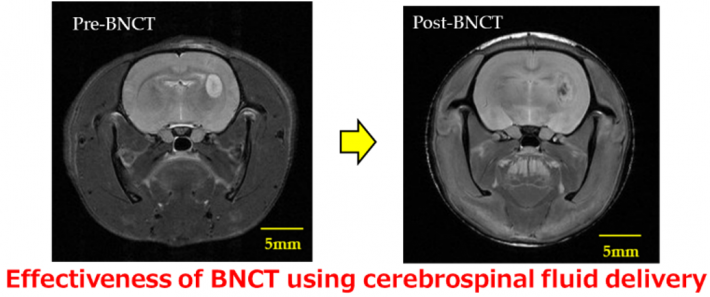
Treating brain tumors is especially challenging because they are surrounded by delicate and essential brain tissue. The goal is simple but difficult: destroy tumor cells while protecting normal brain function. This research focuses on boron neutron capture therapy (BNCT), a unique type of radiation therapy that works selectively inside tumor cells. BNCT uses boron compounds that accumulate in tumors. When exposed to neutrons, a reaction occurs only within the tumor cells, leading to highly targeted cell destruction.
Getting drugs to the right place
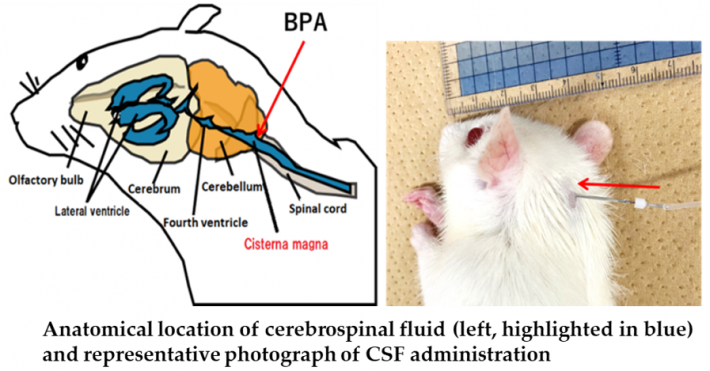
A key challenge in brain tumor treatment is getting drugs into the brain. The blood–brain barrier (BBB) protects the brain, but it also prevents many drugs from reaching tumors effectively. To overcome this, this research explores a different route: delivering boron drugs (BPA) through cerebrospinal fluid (CSF) instead of the bloodstream. This approach may:
- Work with smaller doses
- Deliver drugs more directly to tumors
- Reduce side effects in the rest of the body
Making the invisible visible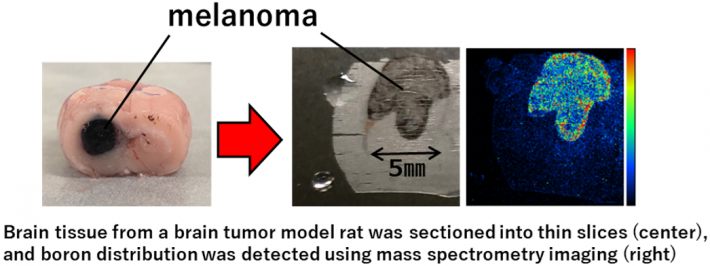
To improve treatment, it’s important to understand what is actually happening inside the body. Advanced imaging techniques are used to visualize where drugs go and how they spread in the brain. This helps reveal:
- How drugs distribute within tumors
- Differences between tumor and normal tissue
- Why treatment works in some cases but not others
The aim is to move beyond trial-and-error and toward designing treatments based on clear mechanisms.
Connecting medicine and engineering
This research combines biological understanding with engineering-based analysis to study how radiation, drugs, and living tissues interact. The long-term goal is to develop:
- Safer and more precise cancer treatments
- Personalized treatment strategies
- New options for difficult-to-treat brain tumors
Publications
- Kusaka S., Voulgaris N., Onishi K., Ueda J., Saito S., Tamaki S., Murata I., Takata T., Suzuki M., “Therapeutic Effect of Boron Neutron Capture Therapy on Boronophenylalanine Administration via Cerebrospinal Fluid Circulation in Glioma Rat Models,” Cells, 13, 19, 1610 (2024).
- Kusaka S., Miyake Y., Tokumaru Y., Morizane Y., Tamaki S., Akiyama Y., Sato F., Murata I., “Boron Delivery to Brain Cells via Cerebrospinal Fluid (CSF) Circulation in BNCT of Brain-Tumor-Model Rats-Ex Vivo Imaging of BPA Using MALDI Mass Spectrometry Imaging,” Life, 12, 11 (2022).
- Kusaka S., Morizane Y., Tokumaru Y., Tamaki S., Maemunah I.R., Akiyama Y., Sato F., Murata I., “Boron Delivery to Brain Cells via Cerebrospinal Fluid (CSF) Circulation for BNCT in a Rat Melanoma Model,” Biology, 11, 3, 397 (2022).
- Kusaka S., Morizane Y., Tokumaru Y., Tamaki S., Maemunah I.R., Akiyama Y., Sato F., Murata I., “Cerebrospinal fluid-based boron delivery system may help increase the uptake boron for boron neutron capture therapy in veterinary medicine: A preliminary study with normal rat brain cells,” Research in Veterinary Science, 148 (2022).
Message to Students
This research sits at the intersection of engineering, medicine, and biology. You don’t need to be an expert in everything—what matters is curiosity and the willingness to explore new ideas. If you are interested in tackling challenging problems and contributing to future medical technologies, you are very welcome to join!
Hobbies & Interests
I enjoy train travel and exploring new places, especially when it leads to good food—hire-zake is a favorite. I also like relaxing in hot springs, watching cats (which I never get tired of), and solving Sudoku and other number puzzles.